
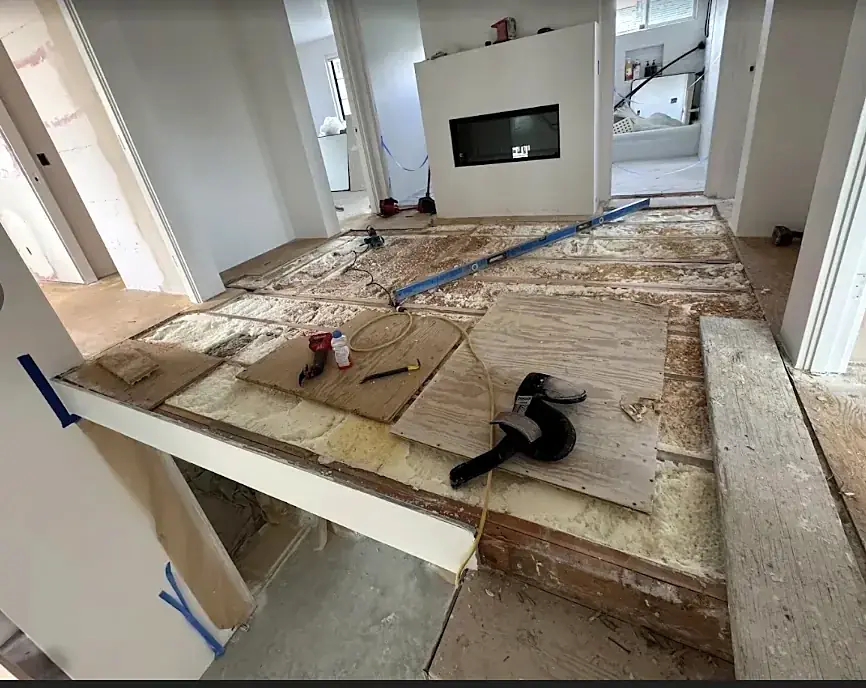
A new floor needs a flat, dry base. Before we install, we check the subfloor with a long level, replace damaged plywood, take off old adhesive and pour leveling compound into the low spots in a slab. Customers mention leveled slabs, moisture damage and foundation issues handled on time and on budget.
How the floor gets checked
Before we check for flat, we check for moisture:
“We test both the wood and the subfloor using calibrated pin and pinless moisture meters, and we perform ASTM moisture tests before any installation.”La Cumbre Floor
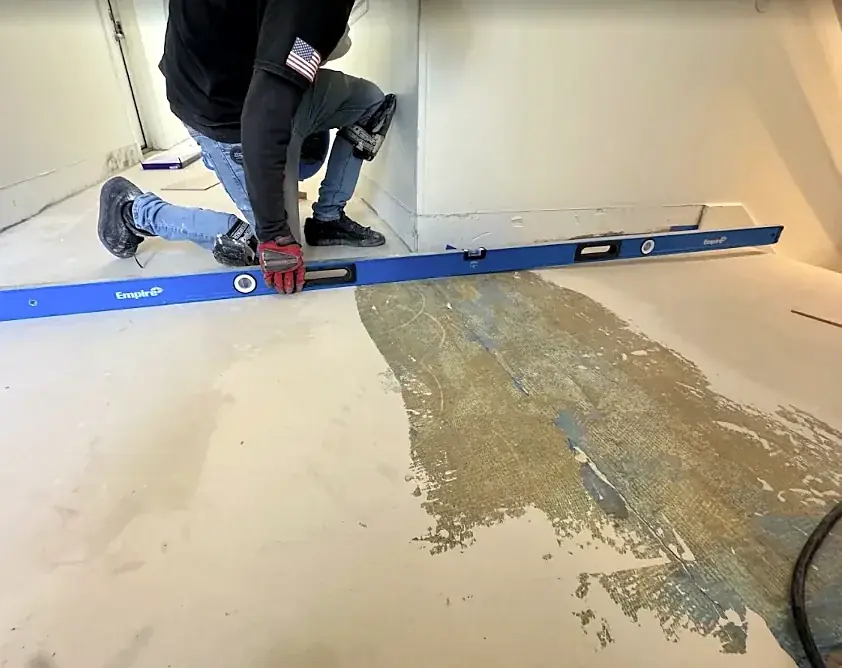
Then we lay a long level or straightedge across the floor in several directions. A gap under it is a low spot, and rocking means a high one. The usual limit for nailed wood floors is 3/16 inch in 6 feet or 1/4 inch in 10 feet (more in the new floors guide).
Wood subfloors
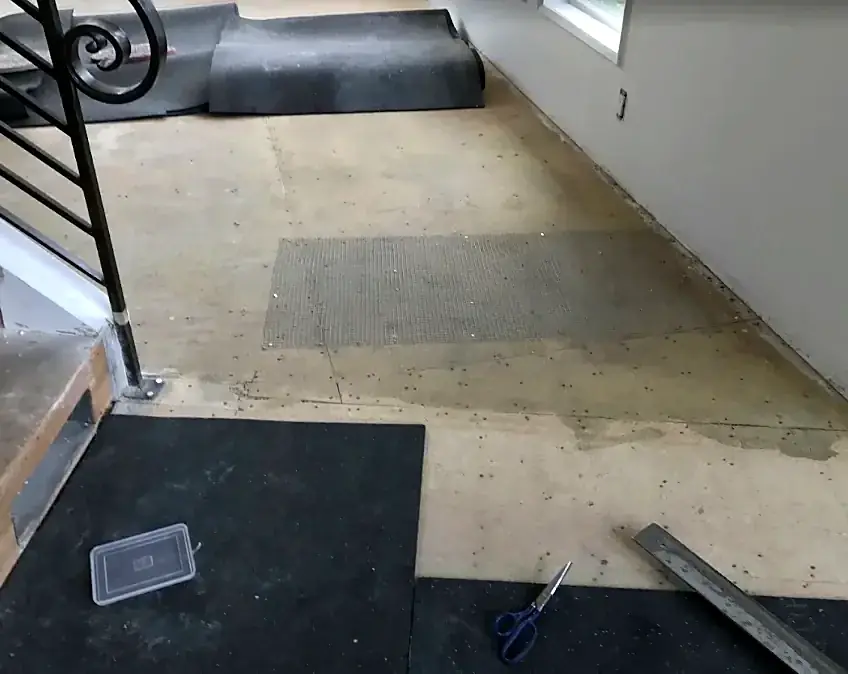
We cut soft, stained or broken plywood back to the joists and replace it. Old glue from a previous floor comes off so the new adhesive bonds to wood instead of residue. In an older house, old black adhesive should be tested for asbestos before anyone grinds it. See tear-out.
Concrete slabs
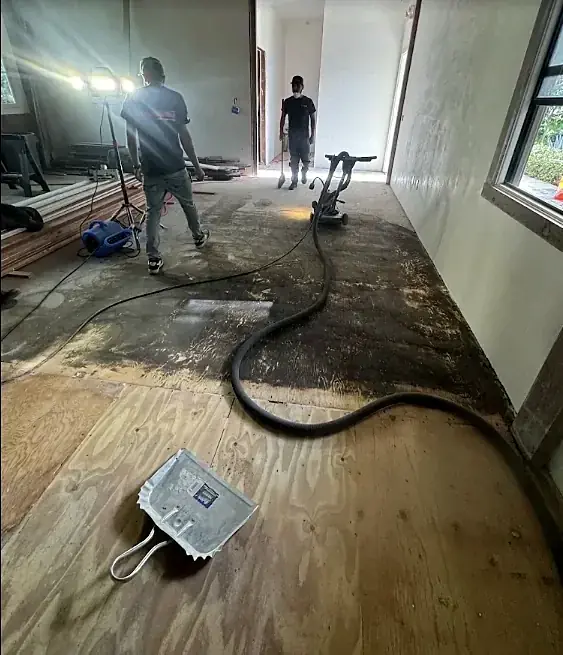
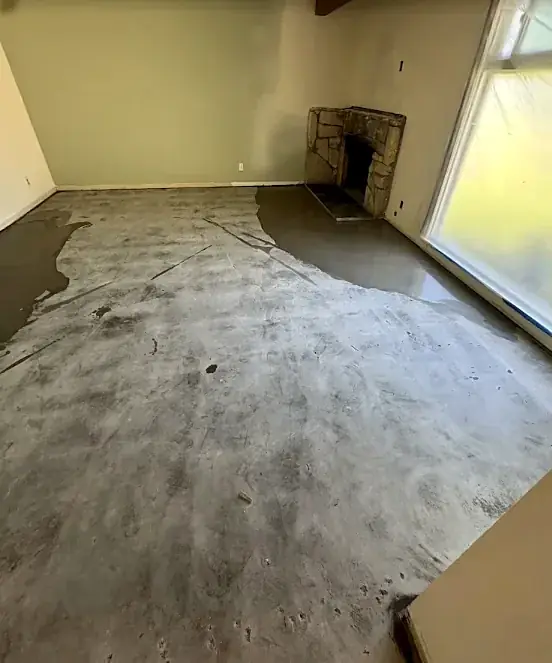
We fill low areas in a slab with leveling compound. It pours as a liquid, finds its own level and hardens. High spots get ground down.
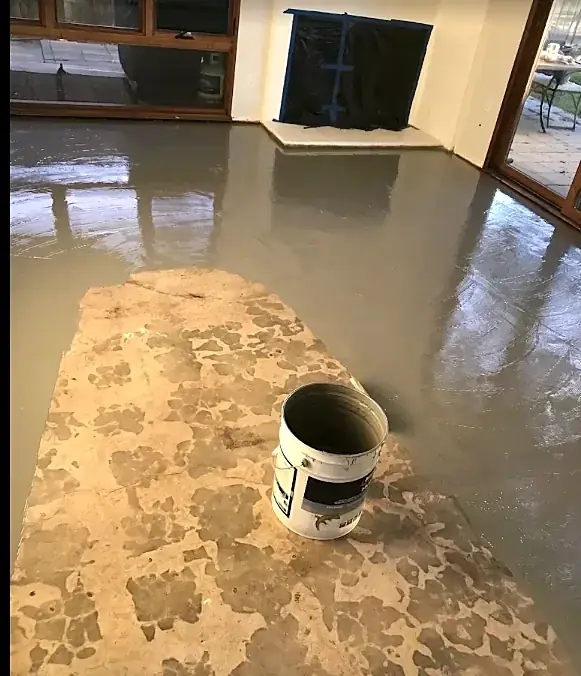
“Toni and his crew are absolutely amazing!! They leveled the concrete slabs, installed cork underlayment, and the LVP beautifully in < 4 days. They were in and out, extremely professional, and kept everything clean. The crew even took out all the vinyl planks and put all of the same planks in piles to ensure none of the same looking planks were next to each other when laid down. 10/10.”Kristin H. · Google review
Moisture damage
Wet wood swells, cups and eventually rots. The water source has to be found and stopped before any boards are replaced. The repair guide covers cupping and buckling.
“TONY, and his crew were great. Always on time and kept us updated on their every progress. We had moisture damaged to our dining area and hallway. He pointed out small details that other floor contractors failed to recognize. Luis and his crew replaced our dining and hallway area, sand and finished the rest of the house to match, the result was amazing. I highly Recommend LA CUMBRE FLOORS. They don't have the lowest prices, but the result is worth it. I was amazed by everything they were able to achieve, thanks to their experience restoring very old and deteriorated floors.”Héctor D. · Google review
When the house has bigger problems
Sometimes the floor is the first place a foundation or framing problem shows. We can point it out, work around it, and tell you when it needs another trade.
“Tony was wonderful to work with. Incredibly knowledgeable about flooring, sub surfaces and foundation issues and walked us through a few different options we could take along with the long term effects of each option. Ultimately, we chose flooring that would be durable and work with our house overtime, and Tony and his team executed the project beautifully and even remained in the proposed timeline and budget amidst issues found with our foundation. I highly recommend!”Brittany A. · Google review
Concrete, cleaned and coated
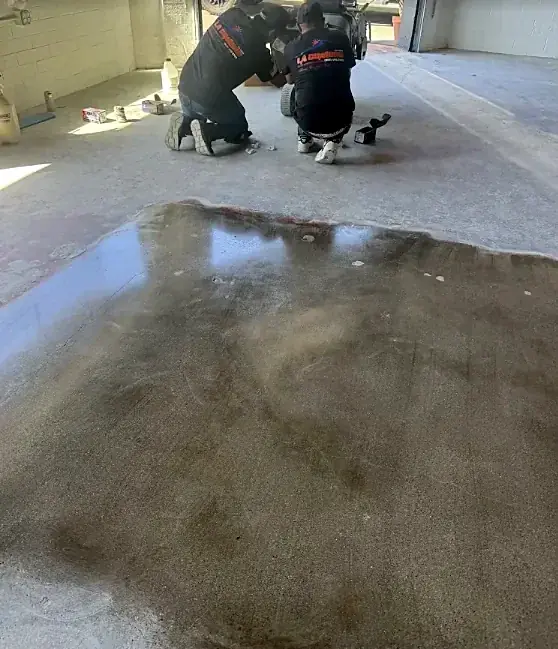
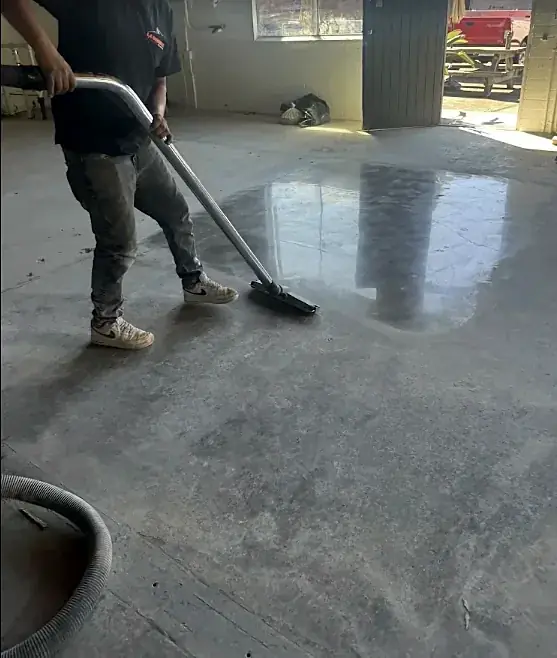
A clean, sound slab can also be the finished floor. See epoxy garage floors and polished concrete.
Questions
Does my subfloor need to be leveled before a new floor?
It needs to be flat more than level. Dips and humps show up later as hollow spots, gaps or boards that move. We check with a straightedge and correct anything outside the tolerance for the floor going in.
Will leveling raise my floor?
Slightly, where compound is poured. That matters at doorways, stairs and where the new floor meets another one, so we check those heights before the pour.
How do I know if moisture damaged my floor?
Look for boards with raised edges, dark stains, soft spots or a musty smell. A contractor confirms it with a moisture meter. We point out the small things other contractors miss.